Introduction
Rockets have been known as enormous vehicles for exploring space, however, rockets were not always used to transport people and satellites or discover places beyond our planet. The most famous missions we know, such as Apollo 11 or the first commercial crew launch, were achieved thanks to years of development and discovery of new technologies but also of weapons and wars.
Historical Context:
The first principles of Rocketry were seen in ancient Rome, in the year 400 BC. Some Romans entertained themselves with wooden birds that flew using steam pressure.
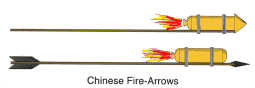
On the other hand, ancient China also used rocket principles to create weapons. Cylinders of gunpowder were placed on arrows to direct attacks at their enemies. When the Chinese and the Mongols were at war with each other, the Mongols, who had invaded Chinese territory, were greeted with a shower of "flying fire arrows".
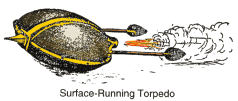
Over the following centuries, different countries continued to develop different types of tools and artifacts that utilized space science. For example, in England was found a way to increase the range of rockets, in France the bazooka weapon was invented, which launches rockets through tubes, and in Italy Torpedoes were invented, another weapon to attack enemy ships.
Invention Description:
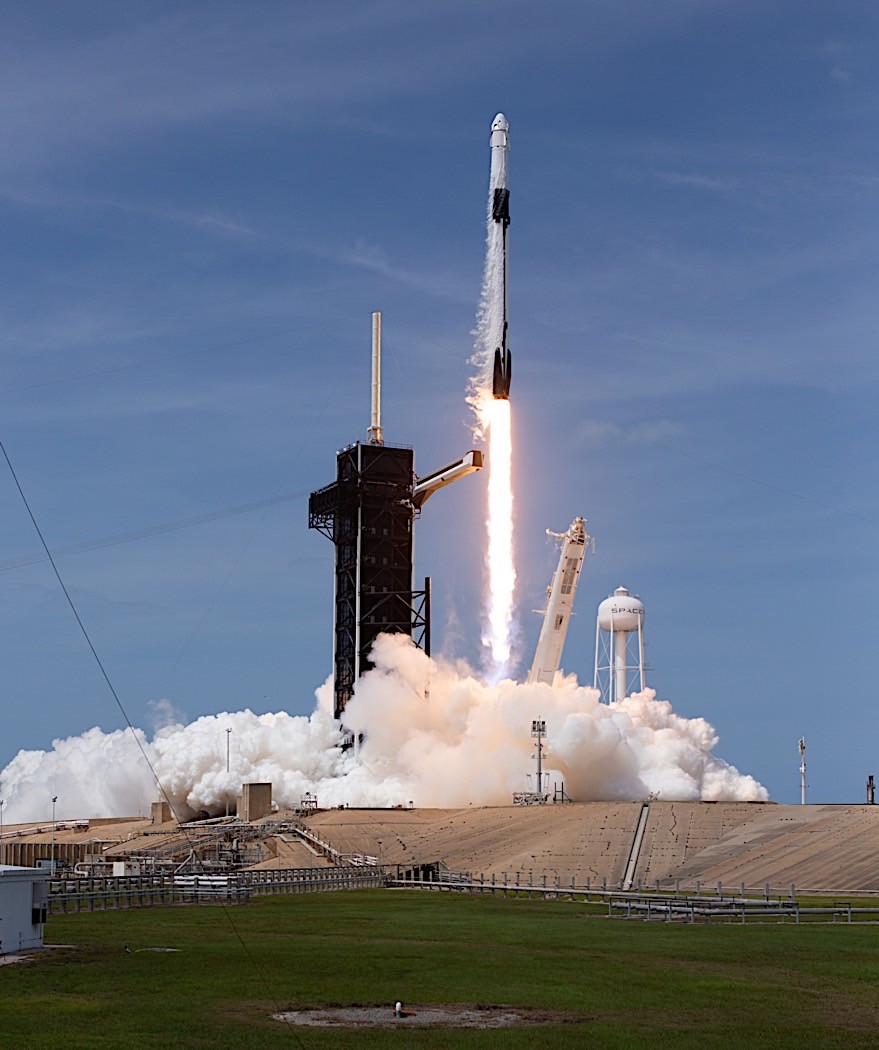
A rocket is today a vehicle used to transport people or payload into outer space, which is capable of reaching speeds of around 28,000 km/h.
Thousands of satellites were placed by rockets to help us with telecommunications, weather predictions or even air traffic control.
Discovery and Invention:
If we want to talk about discovery, we can say that it was in three stages:
In 1898, a Russian named Konstantine Tsiolkovsky proposed that rocket propellants be liquid, which would give rockets a greater range.
In the 20th century, an American named Robert H. Goddard put Tsiolkovsky's idea into practice and built the first liquid-propellant rocket and also achieved the first successful flight with a liquid-propellant rocket. It's amazing to see Goddard's work on Rocketry. He also developed a gyroscope system for flight control, a payload compartment for scientific instruments, and a parachute recovery system to return rockets and instruments safely.
Finally, a German named Hermann Oberth published a book in 1923 about rocket travel into outer space. His writings were really useful for the birth of several rocket construction companies. He also worked on the V-2 rocket, a formidable weapon that was capable of devastating entire cities.
Today, rockets are used for science and technology, and are no longer used for wars as before. Today, different nations work together on different projects to improve our lives as human beings. For example, the ISS is an example of collaboration between nations. Different scientific experiments are carried out there that are not possible on Earth.

About the Inventor:
- Konstantin Tsiolkovsky (1857-1935): Tsiolkovsky is considered the father of spaceflight and the inventor of rockets. He projected a rocket using liquid oxygen and hydrogen as propellants.
- Robert Goddard (1882-1945): An American engineer and physicist, Goddard created the first liquid-fueled rocket. In 1926, he successfully launched a projectile powered by liquid fuels.
- Hermann Oberth (1894-1989): Oberth, a pioneer in rocketry, made significant contributions to the field. His work laid the groundwork for future space exploration.
Relevance:
I guess rockets are really important today, because they are our vehicle to investigate and find the answers to the mystery of our lives. They are the key to discovering new places to live or even to enjoy and imagine how our future generations will live.
Sources: